

Client Implementation
How to Evaluate AI Implementation Platform for Enterprise SaaS: 10 Things to Look For
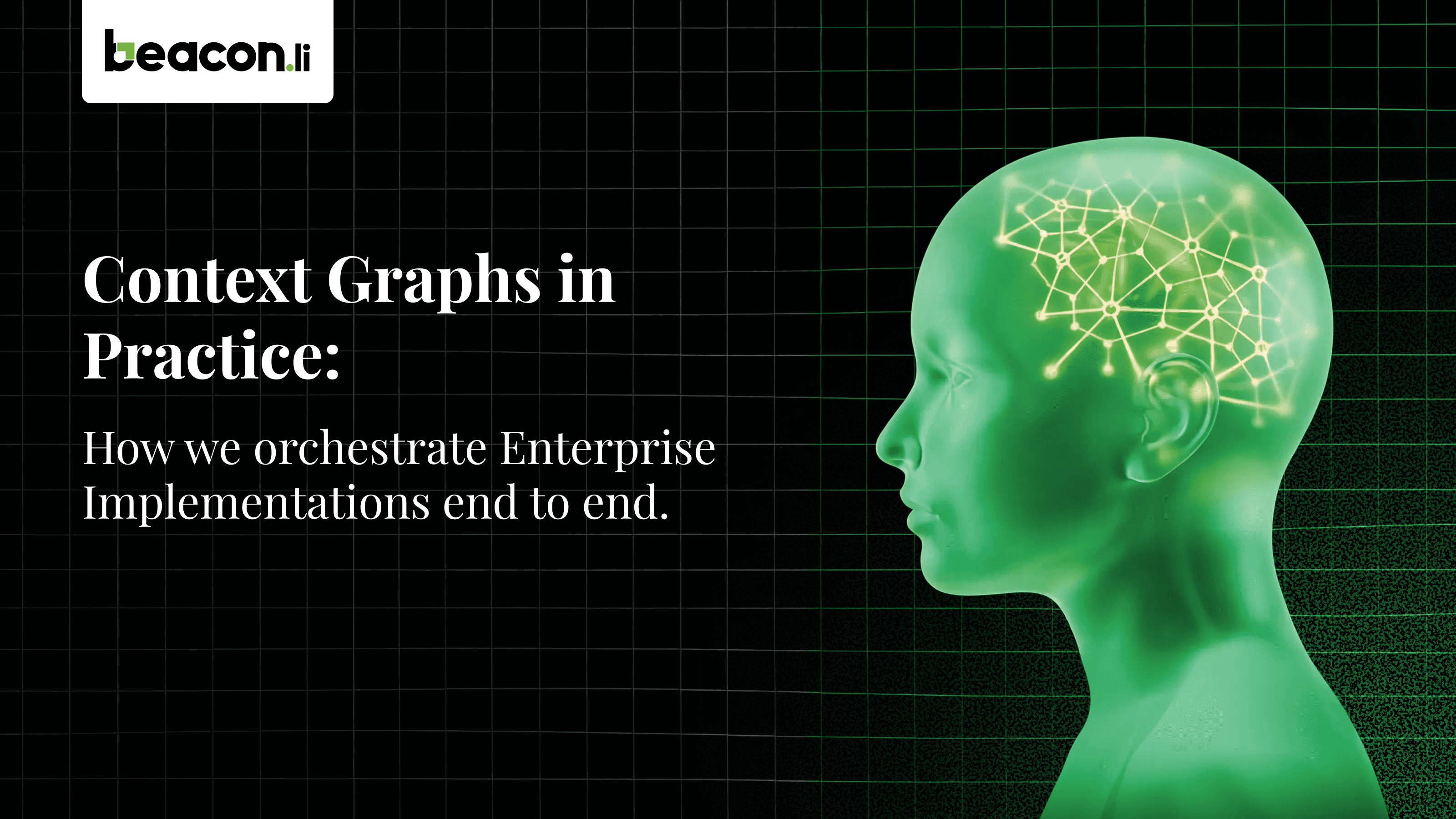



A practical guide to evaluating the features, capabilities, and criteria that matter when AI can actually execute implementation work
Why AI Execution Changes Enterprise Implementation Platform Selection
For years, getting enterprise software into use meant months of manual implementation. Teams gathered requirements, configured systems, mapped and migrated data, built integrations, tested workflows, and worked through exceptions before a customer could finally go live.
AI is changing that.
Software can now interpret requirements, generate and execute configurations, migrate and validate data, test workflows, and handle parts of the implementation process that previously required hours of human effort.
The potential impact is significant: shorter implementation timelines, lower delivery costs, fewer errors, and more implementation capacity without scaling teams at the same rate.
But that also creates a new problem for enterprise buyers.
If AI can actually do the implementation work, how do you evaluate whether it can do that work well?
A polished demo can show you what an AI is capable of in a controlled environment. It doesn't necessarily tell you how much of the work it can actually execute, how reliably it performs with real customer data and business rules, or what happens when things don't go as planned.
That's why evaluating AI implementation software requires looking beyond features. You need to evaluate its actual execution capability and the business impact that capability creates.
What Is AI Implementation Platform?
Understanding what you're buying is critical when selecting an implementation platform.
AI implementation software means platforms that use AI to perform or materially automate core activities in implementing enterprise SaaS systems. This is not documentation software with AI features. It's not project management tools with AI assistants. It's not chatbots that help implementation teams.
This is a platform that actually executes implementation work: configuration, data migration, testing, integration, deployment.
The key distinction is understanding the level of execution the platform can actually deliver.
The AI Execution Ladder: Five Levels of Capability
Vendors use language like "autonomous AI" and "end-to-end automation" to describe their capabilities. But autonomy operates on a spectrum.
Think of execution as five levels of capability:
Generate: produces the work
Assist: helps a human perform it
Execute: performs the work
Validate: verifies the result
Recover: handles failures and exceptions
The important question is whether vendor claims about autonomy hold up when you test with real implementation data and actual exceptions.
Here's what matters: Where on this ladder does the platform actually operate for the work you need done?
And more importantly: Does that level of autonomy translate into business value for your organization?
The Right Level Isn't Always the Highest Level
This is critical: not every task should reach Execute. Not every task should reach Recover.
For routine, repetitive work with clear rules, Execute may be appropriate. For decisions with business impact or compliance implications, Assist or Approve might be the right level. For work that can fail silently with consequences, Validate is essential.
The goal isn't finding the most autonomous software.
The goal is finding software that operates at the right level of autonomy for each specific task.
10 Things to Look For in AI Implementation Platform/ Software
These aren't simply product features. They're the capabilities and evidence you should evaluate before trusting AI with implementation work.
When choosing an implementation platform for your enterprise, assess these ten dimensions against the execution ladder:
1. Configuration Execution
Start with the core question: Does the platform execute configuration autonomously or generate configurations that humans execute?
Feed it your actual product documentation and customer requirements. What percentage of configuration work does it complete without human intervention?
What good looks like: The platform operates at the right autonomy level. Execute for routine configurations, Assist or Approve for business-critical decisions.
For example, Beacon.li is built to move beyond generating configuration recommendations and actually execute implementation work. It's a useful example to test when evaluating whether an AI platform can move from “here's what you should configure” to “I've configured it for you.
2. Configuration Validation
When the software executes a configuration, does it validate the result?
Does it test the configuration against your customer's business rules? Does it catch mismatches between what was configured and what was required?
What good looks like: The software reaches Validate level, testing configurations automatically before they go to production.
3. Data Migration Accuracy
Did the transformation produce the correct data?
How does accuracy degrade when the platform encounters non-standard data?
Test with representative, anonymized production data including the edge cases that make your implementations difficult; legacy formats, missing required fields, duplicate IDs, unusual hierarchies. Accuracy on clean sample data tells you very little. Accuracy on representative production data tells you much more.
What good looks like: First-pass accuracy remains high on non-standard data formats and edge cases.
4. Data Migration Validation
Can the system prove that the migrated data is correct?
After migration, does the platform validate that source and destination data match?
Can it reconcile record counts? Can it identify fields that didn't migrate correctly? Can it flag data quality issues automatically?
What good looks like: The platform reaches Validate level, automatically confirms migration accuracy before declaring completion.
5. Context and Business Rules Understanding
Does the platform understand your customer's specific business rules?
A financial services HRIS implementation requires different compliance configurations than a logistics company's HRIS. Does it adapt to context or apply generic logic?
What good looks like: The platform understands customer-specific rules and adjusts configurations accordingly, not generic defaults.
6. Integration and Multi-System Orchestration
Modern implementations involve your main platform plus identity systems, billing systems, and customer-specific systems. Can the platform orchestrate across multiple systems? Can it handle dependencies between them? Can it configure permissions across platforms?
What good looks like: The platform operates across multiple systems with understanding of cross-system dependencies, not just within a single platform.
7. Human Oversight and Auditability
Can you control the platform in production? Can you audit every decision it made? Can you override or reverse actions if needed?
If the platform executes autonomously but you can't trace what it did or stop it if something goes wrong, you've lost control.
What good looks like: Complete audit trail showing every decision, ability to override decisions, and capability to reverse actions.
8. Exception Detection and Recovery
When the platform encounters data or scenarios it hasn't seen, what happens?
Does it escalate gracefully? Does it fail silently? Can it recover and continue?
Exception handling distinguishes Execute capability from Recover capability.
What good looks like: The platform detects exceptions, escalates high-risk ones for human review, and recovers from routine exceptions independently.
9. Lifecycle Coverage
Implementation follows a consistent sequence: Discovery → Requirements → Design → Configuration → Migration → Testing → UAT → Cutover → Go-live → Hypercare.
Don't ask whether an AI platform supports the full lifecycle. Instead, ask where on the execution ladder it operates at each critical stage.
For each stage, evaluate:
Configuration stage: Generate recommendations, Assist with setup, or Execute autonomously?
Data migration: Execute migration, Validate results, or Recover from errors?
Testing: Assist with test design, Execute test runs, or Validate test results?
UAT: Generate test scenarios or Assist with UAT execution?
Go-live: Execute cutover coordination or Assist with manual coordination?
Hypercare: Detect issues and assist, or detect issues and resolve autonomously?
The right level of autonomy changes per stage based on risk, business criticality, and decision requirements.
What good looks like: The software operates at the appropriate level of autonomy for each implementation stage. Not necessarily the highest level, but the right level for the task.
Some platforms specialize in one part of the implementation lifecycle. Others are expanding into broader orchestration.
For example, Vern focuses on customer data migration, while ProcureLabs covers a broader procurement implementation lifecycle. Superglue combines migration, configuration and customer onboarding.
Beacon.li takes a broader implementation-orchestration approach, covering requirements, configuration, data migration, testing, cutover and hypercare.
The evaluation question therefore isn't simply “Does this platform support implementation?” It's “How much of my implementation lifecycle can it actually execute?”
10. Measured Business Value
Has this software actually improved implementation timelines and margins in comparable implementations?
Stop measuring whether the software "has AI" or whether it "touches" 80 percent of tasks. Measure outcomes:
How much faster do implementations reach production? (Actual calendar days, not theoretical)
How many human hours does implementation require?
What is the all-in cost per implementation including software, setup, exception handling, and rework?
What percentage of work is correct on first pass without rework?
How much does project margin improve?
How much additional implementation capacity can the team handle?
If a vendor can't document that their software improved at least one of these metrics in comparable implementations, that's important information.
What good looks like: Documented improvements in timeline, cost per implementation, human effort, or team capacity from comparable customers.
How to Test AI Implementation Platform in Practice
The best way to assess an AI implementation platform is through a realistic test scenario that reveals where the software actually sits on the execution ladder.
Give every vendor the same assignment:
Anonymized customer requirements from one of your real implementations
Actual product documentation
Representative, anonymized production data, including the edge cases that make your implementations difficult
Access to a test environment
Defined scope: "Configure the user hierarchy, migrate employee records, set up integrations, run validation"
Then measure:
How long did it take?
How many human interventions were required? (At what rung did it hand off?)
How many errors occurred?
How much actual work did the software complete?
How much required human completion or rework?
Can you reproduce the results?
Can you audit every AI decision?
This reveals the truth in practice.
Questions Enterprise Buyers Ask Before Choosing AI Implementation Platform/Software
Does AI implementation software replace implementation teams or consultants?
Not necessarily. The more useful question is which parts of implementation it can execute without human intervention.
AI may automate configuration, migration, testing, and repetitive implementation work. However, humans continue to own requirements gathering, business decisions, exception handling, governance, and customer relationships.
The evaluation should therefore focus on work displaced or accelerated, not whether the software "replaces the team."
How long does it take to implement AI implementation software?
Implementation time depends on access, integrations, data, workflows, and scope involved. When evaluating AI implementation software, ask vendors to:
Define what data and system access is required before deployment
Estimate time to first production use case
Distinguish between time to deploy the AI software and time for that software to begin reducing implementation effort
More importantly, distinguish between deployment time and value realization time.
What data and systems does AI implementation software need access to?
When evaluating AI implementation software, it typically requires access to:
Product documentation
Customer requirements documentation
Customer data (production or representative samples)
Target SaaS environment
Source/legacy systems
APIs and integrations
Test environments
Identity/access systems
Configuration metadata
Ask vendors: What permissions does the AI need to actually execute?
That ties directly to your execution capability evaluation.
Is AI implementation software suitable for complex enterprise implementations?
Yes, but your evaluation criteria must be explicit.
Complexity is exactly where the execution ladder becomes useful. The more complex the implementation, the less useful a demo on clean data becomes.
When evaluating AI implementation software for complex scenarios, test against:
Non-standard configurations
Legacy data with format inconsistencies
Multiple interconnected systems
Business-rule exceptions
Failure recovery scenarios
How do you measure the ROI of AI implementation software?
Measure business outcomes:
Metric | What It Means |
Time to production | Calendar days from kickoff to go-live |
Human hours required | Total implementation effort including AI setup |
Cost per implementation | All-in cost including software, setup, rework |
First-pass success rate | Percentage of work correct without rework |
Project margin improvement | Profit increase per implementation |
Implementation capacity | Additional implementations team can handle |
If the software doesn't improve at least one of these metrics, reconsider the investment.
The Bottom Line
When you evaluate AI implementation software, don't evaluate it like another SaaS platform.
Evaluate it against the execution ladder. For every piece of implementation work that matters to you, understand:
Where does this platform sit on the ladder (Generate → Assist → Execute → Validate → Recover)?
Does that position hold up when you test it with representative production data?
Does that level of execution actually translate into business value?
The vendors that can answer those questions directly and prove it through realistic testing are worth investing in.
The vendors that hedge or repeat marketing language without supporting evidence are revealing their actual capabilities.
The question isn't whether your implementation software has AI. It's how much implementation work the AI can actually execute and whether it can do so reliably in the real world.
If you're evaluating what AI execution looks like in practice, see how Beacon.li approaches implementation execution and run it through the same framework.
A practical guide to evaluating the features, capabilities, and criteria that matter when AI can actually execute implementation work
Why AI Execution Changes Enterprise Implementation Platform Selection
For years, getting enterprise software into use meant months of manual implementation. Teams gathered requirements, configured systems, mapped and migrated data, built integrations, tested workflows, and worked through exceptions before a customer could finally go live.
AI is changing that.
Software can now interpret requirements, generate and execute configurations, migrate and validate data, test workflows, and handle parts of the implementation process that previously required hours of human effort.
The potential impact is significant: shorter implementation timelines, lower delivery costs, fewer errors, and more implementation capacity without scaling teams at the same rate.
But that also creates a new problem for enterprise buyers.
If AI can actually do the implementation work, how do you evaluate whether it can do that work well?
A polished demo can show you what an AI is capable of in a controlled environment. It doesn't necessarily tell you how much of the work it can actually execute, how reliably it performs with real customer data and business rules, or what happens when things don't go as planned.
That's why evaluating AI implementation software requires looking beyond features. You need to evaluate its actual execution capability and the business impact that capability creates.
What Is AI Implementation Platform?
Understanding what you're buying is critical when selecting an implementation platform.
AI implementation software means platforms that use AI to perform or materially automate core activities in implementing enterprise SaaS systems. This is not documentation software with AI features. It's not project management tools with AI assistants. It's not chatbots that help implementation teams.
This is a platform that actually executes implementation work: configuration, data migration, testing, integration, deployment.
The key distinction is understanding the level of execution the platform can actually deliver.
The AI Execution Ladder: Five Levels of Capability
Vendors use language like "autonomous AI" and "end-to-end automation" to describe their capabilities. But autonomy operates on a spectrum.
Think of execution as five levels of capability:
Generate: produces the work
Assist: helps a human perform it
Execute: performs the work
Validate: verifies the result
Recover: handles failures and exceptions
The important question is whether vendor claims about autonomy hold up when you test with real implementation data and actual exceptions.
Here's what matters: Where on this ladder does the platform actually operate for the work you need done?
And more importantly: Does that level of autonomy translate into business value for your organization?
The Right Level Isn't Always the Highest Level
This is critical: not every task should reach Execute. Not every task should reach Recover.
For routine, repetitive work with clear rules, Execute may be appropriate. For decisions with business impact or compliance implications, Assist or Approve might be the right level. For work that can fail silently with consequences, Validate is essential.
The goal isn't finding the most autonomous software.
The goal is finding software that operates at the right level of autonomy for each specific task.
10 Things to Look For in AI Implementation Platform/ Software
These aren't simply product features. They're the capabilities and evidence you should evaluate before trusting AI with implementation work.
When choosing an implementation platform for your enterprise, assess these ten dimensions against the execution ladder:
1. Configuration Execution
Start with the core question: Does the platform execute configuration autonomously or generate configurations that humans execute?
Feed it your actual product documentation and customer requirements. What percentage of configuration work does it complete without human intervention?
What good looks like: The platform operates at the right autonomy level. Execute for routine configurations, Assist or Approve for business-critical decisions.
For example, Beacon.li is built to move beyond generating configuration recommendations and actually execute implementation work. It's a useful example to test when evaluating whether an AI platform can move from “here's what you should configure” to “I've configured it for you.
2. Configuration Validation
When the software executes a configuration, does it validate the result?
Does it test the configuration against your customer's business rules? Does it catch mismatches between what was configured and what was required?
What good looks like: The software reaches Validate level, testing configurations automatically before they go to production.
3. Data Migration Accuracy
Did the transformation produce the correct data?
How does accuracy degrade when the platform encounters non-standard data?
Test with representative, anonymized production data including the edge cases that make your implementations difficult; legacy formats, missing required fields, duplicate IDs, unusual hierarchies. Accuracy on clean sample data tells you very little. Accuracy on representative production data tells you much more.
What good looks like: First-pass accuracy remains high on non-standard data formats and edge cases.
4. Data Migration Validation
Can the system prove that the migrated data is correct?
After migration, does the platform validate that source and destination data match?
Can it reconcile record counts? Can it identify fields that didn't migrate correctly? Can it flag data quality issues automatically?
What good looks like: The platform reaches Validate level, automatically confirms migration accuracy before declaring completion.
5. Context and Business Rules Understanding
Does the platform understand your customer's specific business rules?
A financial services HRIS implementation requires different compliance configurations than a logistics company's HRIS. Does it adapt to context or apply generic logic?
What good looks like: The platform understands customer-specific rules and adjusts configurations accordingly, not generic defaults.
6. Integration and Multi-System Orchestration
Modern implementations involve your main platform plus identity systems, billing systems, and customer-specific systems. Can the platform orchestrate across multiple systems? Can it handle dependencies between them? Can it configure permissions across platforms?
What good looks like: The platform operates across multiple systems with understanding of cross-system dependencies, not just within a single platform.
7. Human Oversight and Auditability
Can you control the platform in production? Can you audit every decision it made? Can you override or reverse actions if needed?
If the platform executes autonomously but you can't trace what it did or stop it if something goes wrong, you've lost control.
What good looks like: Complete audit trail showing every decision, ability to override decisions, and capability to reverse actions.
8. Exception Detection and Recovery
When the platform encounters data or scenarios it hasn't seen, what happens?
Does it escalate gracefully? Does it fail silently? Can it recover and continue?
Exception handling distinguishes Execute capability from Recover capability.
What good looks like: The platform detects exceptions, escalates high-risk ones for human review, and recovers from routine exceptions independently.
9. Lifecycle Coverage
Implementation follows a consistent sequence: Discovery → Requirements → Design → Configuration → Migration → Testing → UAT → Cutover → Go-live → Hypercare.
Don't ask whether an AI platform supports the full lifecycle. Instead, ask where on the execution ladder it operates at each critical stage.
For each stage, evaluate:
Configuration stage: Generate recommendations, Assist with setup, or Execute autonomously?
Data migration: Execute migration, Validate results, or Recover from errors?
Testing: Assist with test design, Execute test runs, or Validate test results?
UAT: Generate test scenarios or Assist with UAT execution?
Go-live: Execute cutover coordination or Assist with manual coordination?
Hypercare: Detect issues and assist, or detect issues and resolve autonomously?
The right level of autonomy changes per stage based on risk, business criticality, and decision requirements.
What good looks like: The software operates at the appropriate level of autonomy for each implementation stage. Not necessarily the highest level, but the right level for the task.
Some platforms specialize in one part of the implementation lifecycle. Others are expanding into broader orchestration.
For example, Vern focuses on customer data migration, while ProcureLabs covers a broader procurement implementation lifecycle. Superglue combines migration, configuration and customer onboarding.
Beacon.li takes a broader implementation-orchestration approach, covering requirements, configuration, data migration, testing, cutover and hypercare.
The evaluation question therefore isn't simply “Does this platform support implementation?” It's “How much of my implementation lifecycle can it actually execute?”
10. Measured Business Value
Has this software actually improved implementation timelines and margins in comparable implementations?
Stop measuring whether the software "has AI" or whether it "touches" 80 percent of tasks. Measure outcomes:
How much faster do implementations reach production? (Actual calendar days, not theoretical)
How many human hours does implementation require?
What is the all-in cost per implementation including software, setup, exception handling, and rework?
What percentage of work is correct on first pass without rework?
How much does project margin improve?
How much additional implementation capacity can the team handle?
If a vendor can't document that their software improved at least one of these metrics in comparable implementations, that's important information.
What good looks like: Documented improvements in timeline, cost per implementation, human effort, or team capacity from comparable customers.
How to Test AI Implementation Platform in Practice
The best way to assess an AI implementation platform is through a realistic test scenario that reveals where the software actually sits on the execution ladder.
Give every vendor the same assignment:
Anonymized customer requirements from one of your real implementations
Actual product documentation
Representative, anonymized production data, including the edge cases that make your implementations difficult
Access to a test environment
Defined scope: "Configure the user hierarchy, migrate employee records, set up integrations, run validation"
Then measure:
How long did it take?
How many human interventions were required? (At what rung did it hand off?)
How many errors occurred?
How much actual work did the software complete?
How much required human completion or rework?
Can you reproduce the results?
Can you audit every AI decision?
This reveals the truth in practice.
Questions Enterprise Buyers Ask Before Choosing AI Implementation Platform/Software
Does AI implementation software replace implementation teams or consultants?
Not necessarily. The more useful question is which parts of implementation it can execute without human intervention.
AI may automate configuration, migration, testing, and repetitive implementation work. However, humans continue to own requirements gathering, business decisions, exception handling, governance, and customer relationships.
The evaluation should therefore focus on work displaced or accelerated, not whether the software "replaces the team."
How long does it take to implement AI implementation software?
Implementation time depends on access, integrations, data, workflows, and scope involved. When evaluating AI implementation software, ask vendors to:
Define what data and system access is required before deployment
Estimate time to first production use case
Distinguish between time to deploy the AI software and time for that software to begin reducing implementation effort
More importantly, distinguish between deployment time and value realization time.
What data and systems does AI implementation software need access to?
When evaluating AI implementation software, it typically requires access to:
Product documentation
Customer requirements documentation
Customer data (production or representative samples)
Target SaaS environment
Source/legacy systems
APIs and integrations
Test environments
Identity/access systems
Configuration metadata
Ask vendors: What permissions does the AI need to actually execute?
That ties directly to your execution capability evaluation.
Is AI implementation software suitable for complex enterprise implementations?
Yes, but your evaluation criteria must be explicit.
Complexity is exactly where the execution ladder becomes useful. The more complex the implementation, the less useful a demo on clean data becomes.
When evaluating AI implementation software for complex scenarios, test against:
Non-standard configurations
Legacy data with format inconsistencies
Multiple interconnected systems
Business-rule exceptions
Failure recovery scenarios
How do you measure the ROI of AI implementation software?
Measure business outcomes:
Metric | What It Means |
Time to production | Calendar days from kickoff to go-live |
Human hours required | Total implementation effort including AI setup |
Cost per implementation | All-in cost including software, setup, rework |
First-pass success rate | Percentage of work correct without rework |
Project margin improvement | Profit increase per implementation |
Implementation capacity | Additional implementations team can handle |
If the software doesn't improve at least one of these metrics, reconsider the investment.
The Bottom Line
When you evaluate AI implementation software, don't evaluate it like another SaaS platform.
Evaluate it against the execution ladder. For every piece of implementation work that matters to you, understand:
Where does this platform sit on the ladder (Generate → Assist → Execute → Validate → Recover)?
Does that position hold up when you test it with representative production data?
Does that level of execution actually translate into business value?
The vendors that can answer those questions directly and prove it through realistic testing are worth investing in.
The vendors that hedge or repeat marketing language without supporting evidence are revealing their actual capabilities.
The question isn't whether your implementation software has AI. It's how much implementation work the AI can actually execute and whether it can do so reliably in the real world.
If you're evaluating what AI execution looks like in practice, see how Beacon.li approaches implementation execution and run it through the same framework.








Copyright © 2026 Beacon.li. All rights reserved.
Copyright © 2026 Beacon.li. All rights reserved.
